Blog Detail
25 Aug
Basmati Rice India: Types, Quality & Cooking Guide 2026
It should never be underestimated how important basmati rice is in terms of the Indian diet. Long-grain structure, unique aroma, fluffiness, and elongation are but a few traits that help make this wonderful kind of rice accessible even on an everyday basis. Anyone looking into basmati rice in India should have an idea about types, processing, quality, and cooking techniques to ease the process of purchase.
What Makes Basmati Rice Special?
Basmati has elongated and thin grains along with unique fragrance. Good quality grains will have a clean and uniform appearance. The grains should stay distinct when cooked. Rice quality is not only dependent on its length. The type of rice, harvesting time, storage conditions, milling process, grading, packaging and cooking may also affect the end product. It is vital that consideration be given to the aroma, texture, purity, and cooking quality of the product. In search of Basmati Rice India, these qualities can be used as a guide.
Understanding Basmati Varieties
Different varieties of Basmati rice exist, and depending on what one wants to use the grain for, there are many that are suitable. Some are known for being long-grain rice, while others are balanced in aroma, cooking qualities, texture, and cost. Examples of varieties include 1121, 1509, 1401, 1718, 1885, and Pusa. These rice types have varying physical grain characteristics. Extra-long grain might work well if the rice needs to look appealing. Normal meal preparations would require something with good cooking quality, smell, and taste. None is better than another; it is all relative to preference. Commercial buyers may consider batch consistency. When comparing Basmati Rice India, match the variety to the dish.
Raw, Steam, Sella and Golden Sella
Basmati can be processed in different ways. Raw Basmati follows a traditional milling route. Steam Basmati is treated with controlled steaming before milling. Sella rice, otherwise known as parboiled rice, is first parboiled before being dried and milled. Golden Sella has an obvious gold hue after it is processed. This could affect the cooking nature and appearance of the rice. You should know whether it is a certain type and process before buying the rice. The rice used in biryani is not always the same as the one used for daily consumption.
How to Identify Good Quality Rice
First, examine the grains to ensure that they are clean and sorted properly. Excessive number of broken grains may spoil the appearance and cooking of rice. Then, pay attention to the smell of the product. Unwanted odor may speak about improper storage conditions. The packaging plays an essential role in preserving rice. The sealed pack will give protection from moisture, dirt, pests, and other contaminants. Make sure to review the packaging and instructions of storage before purchasing. These are the parameters for comparing Basmati Rice India products.
Why Rice Processing Matters
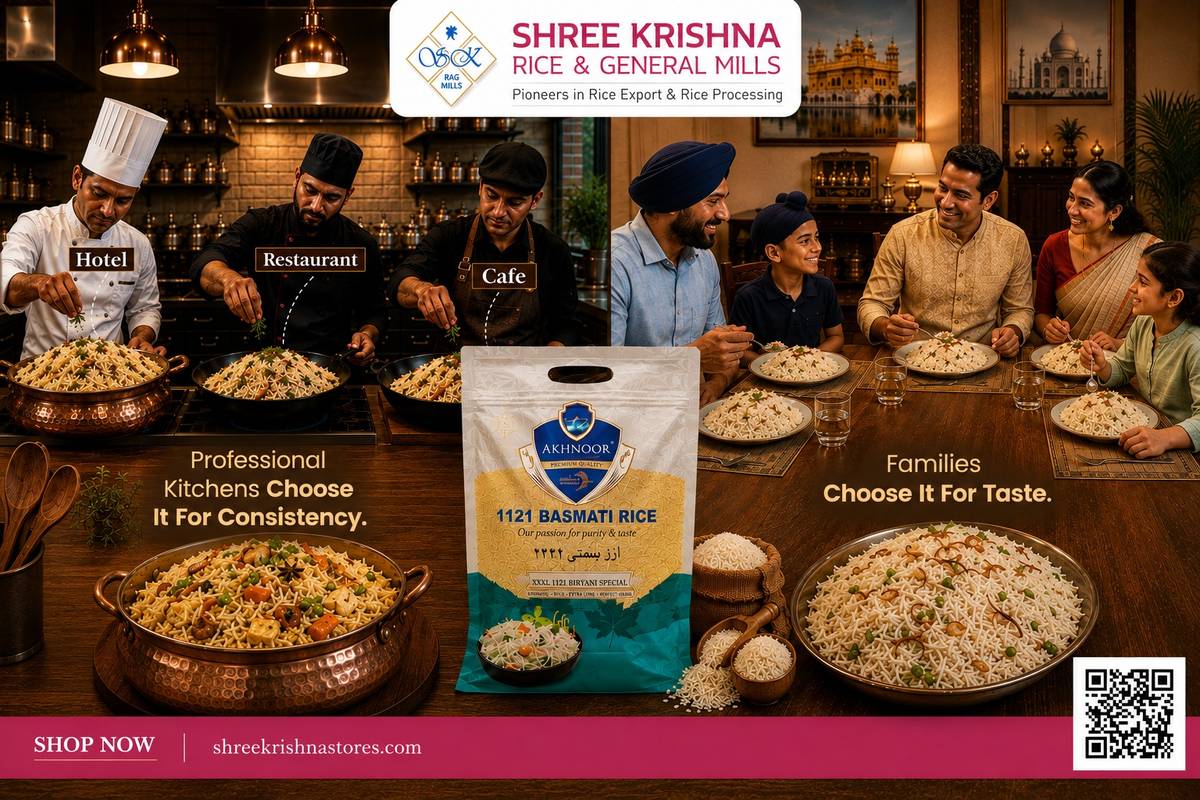
Quality starts before milling. Following the selection of appropriate paddy, comes its cleaning, drying, milling, sorting, grading, and packing. Each of these steps may affect the end grains. Cleaning requires the removal of dirt and other substances. Milling entails separation of the rice from its husks. Sorting and grading ensure consistency in quality, while packing provides safety during storage and transportation. Modern processing may help in ensuring consistency in appearance and cooking qualities. Quality also encompasses proper handling of the rice after harvesting. Shree Krishna Rice and General Mills focuses on both the Basmati and non-Basmati rice. Its website presents several Basmati varieties and processing options for household, commercial, and export needs.
Choosing Rice for Home or Business
Home consumers normally look into issues like taste, smell, texture, quality, and price. However, there might be additional criteria to be considered when talking about restaurants and other types of businesses that deal with food. In case you want to buy basmati rice from India, do not rely solely on its visual characteristics. The following factors must be taken into consideration: type of the product, way of processing, grains characteristics, packing, and suitability for your recipes. Packaging and logistics may play as important a role as taste for wholesale and export buyers. Buyers investigatingBasmati Rice India must also consider specifications.
Shree Krishna Rice and Quality Focus
Shree Krishna Rice & General Mills presents Basmati rice with due consideration to quality, processing, and uniformity. Details about various types of rice available can be obtained from its website.
Frequently Asked Questions
1. Which Basmati rice variety is the best?
There isn't a clear answer to this question. You need to think about the length of the grain, aroma, texture, cost, and also the type of food.
2. Can Basmati rice be used for regular food?
Of course. It is good for rice, dal-rice, pulao, and jeera rice. Select the one which has your preferred texture.
3. Which Basmati rice is good for making biryani?
Long-grain varieties are usually recommended since they can produce beautiful grains once cooked properly.
4.Is soaking of Basmati rice necessary?
This will be based on the type of rice used. Check the instructions that are included in the packaging of the product.
5. How should Basmati rice be stored?
Rice should be stored in cool and dry places and should be protected from any moisture, warmth, pests, and light exposure.
Conclusion
Selection of Basmati rice becomes much easier when you know about different types of Basmati rice, its processing, quality parameters, and cooking parameters. The size of grain is a parameter but not the only one. Other factors worth considering include aroma, purity, texture, quality, packing, and cooking behavior. No matter whether you cook for your family, Biryani, or buy rice for commercial use, an informed decision will prove beneficial for you. Choose according to your recipe and cooking methods.
With the right type of Basmati rice and its right cooking, Basmati rice will enhance the texture of your cooking.
Recent Post
Partner With Us
Please fill out the form below and we will get back to you as soon as possible to discuss partnership opportunities.