Blog Detail
17 Sep
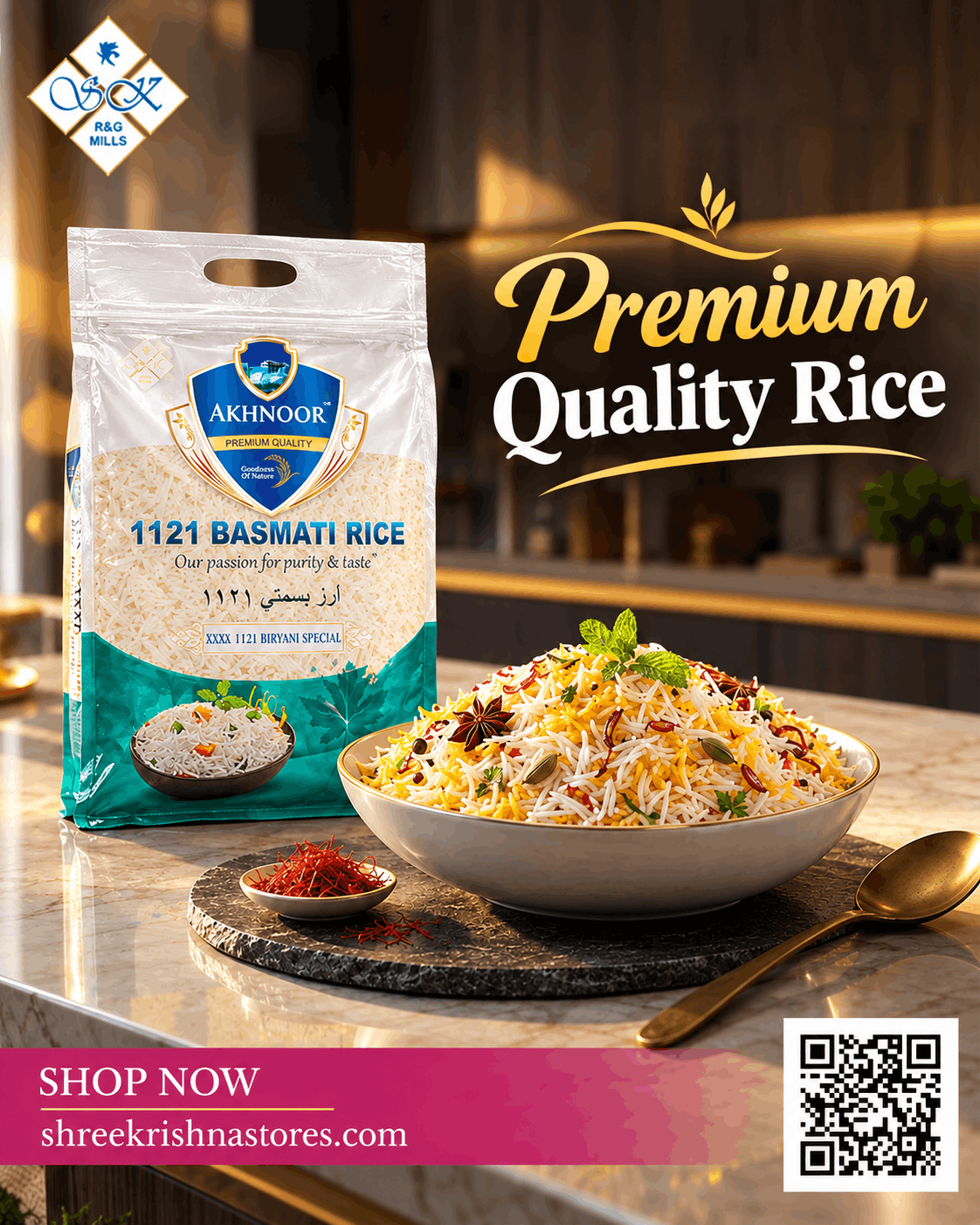
Premium Quality Rice| Punjab Sourcing, Quality Checks & Buying Guide
Premium Quality rice begins long before the rice grain is brought into the kitchen carefully. This begins with having the right paddy, correct sourcing, proper milling, right grading and appropriate packaging. From a buyer’s perspective, a well-packed bag is just one part of the process. Knowledge about rice sourcing and processing can facilitate purchasing.
Punjab Sourcing and Paddy Selection
The Punjab region is rich in rice cultivation and milling systems involving farmers, procurement systems, mills and exporters. At Shree Krishna Rice & General Mills, the paddy is brought in through controlled entry points and then checked based on factors such as moisture content, length of grain, aroma, admixture and quality before processing.
When a buyer needs high-quality rice, procurement is significant since the condition of the paddy will determine the outcome of the mill process. A good lot of paddy will be clean, handled well and will suit the particular variety and milling process desired. It is not enough just being located somewhere.
Understanding Rice Varieties
While determining the best rice in terms of premium quality, the first thing to do is determine the variety of the rice. There are two types of rice; Basmati and Non-Basmati. The qualities that distinguish Basmati rice from other forms of rice are slender grains, smell, and elongation after cooking. Examples of these kinds of varieties include 1121, 1401, 1509, 1718, 1885, and PUSA. Non-Basmati varieties include PR11, PR06, Sharbati, and Sugandha. From all these varieties, the varieties that have the quality of extra-long grains are 1121 and 1509. Nonetheless, it all depends on what one wishes to use the rice for.
Processing: Raw, Steam and Sella
Premium quality rice can vary owing to the processing that influences the outcome of cooking. Processing may influence the appearance, texture, and cooking properties of the rice. The regular or raw rice will undergo the traditional milling process. Rice steam is a processed rice by undergoing steaming before milling. Rice sella is boiled and hence has firm grains that stay separate when cooked. Rice Golden Sella has a distinct golden color. The choices should not be considered as being the same. While purchasing, one needs to consider how the rice cooks.
Steps in milling today include cleaning, destoning, steaming or parboiling if necessary, drying, dehusking, polishing, sorting, grading, and hygienic packaging. All of these stages could affect the end result. Sorting, for instance, will help eliminate undesired materials.
How to Check Rice Quality Before Buying
A high-quality rice list would be incomplete without consideration of grain consistency and smell. The use of a list would help in minimizing errors. First, examine the grains for size consistency, cleanliness, and appropriate number of broken grains. Secondly, smell the rice. Basmati should smell naturally rather than artificially. Finally, examine the package. Confirm the variety, process, quantity, batch/lot numbers, and other details that must be available.
When buying rice commercially or for exports, visual examination should be complemented with sample test. Cook the sample and take notes on cooking time, elongation, separation, texture, smell, and breakages. For bulk purchase, the buyer can establish the specifications of moisture content, grain length, percentage of breakages, purity, packaging, among others before shipment.
Specification of qualities in writing helps in maintaining the consistency in future orders. This is particularly important in trade.
Comparing Quality Without Looking Only at Price
Premium quality rice for buyers should fulfill the required specifications in the batch. The cost of rice is an important factor but it should not be the sole point of comparison. Two batches of rice can vary in terms of variety, type of milling, length of grains, percentage of breaks, aroma, cooking, packing, and consistency. The cheaper quoted price might not necessarily be the one which would incur less total costs in buying due to high wastage in the product. A good comparison should start from the specifications first. Rice varieties and types of milling should be compared while requesting samples of quality and comparing the final result after cooking.
Key Takeaways
- Select premium quality rice through sampling and not just appearance.
- Premium quality rice is a product of a number of processes that are interconnected as opposed to being a single process.
- Purchasing from Punjab ensures the buyer has access to an environment which supports rice growing and milling, but quality still relies on proper procurement and milling.
- The variety and milling process should depend on the use.
- In case a customer is looking for quality rice, Shree Krishna Rice & General Mills provides details of the varieties and the milling process they use in their products, namely Basmati and Non-Basmati rice.
FAQs
1. What characterizes rice as premium?
In general, premium rice is a combination of right variety, right grain, right processing, cooking performance, right aroma, and quality. Requirements will depend on the consumer and purpose.
2. Why is Punjab sourcing important for rice?
Punjab has an existing chain comprising the production of rice, collection, processing, and distribution of the product. It should be noted that Punjab sourcing alone cannot ensure quality; it is the whole process of quality control.
3. What is the variety of Basmati that I should choose?
There are several varieties such as 1121, 1509, 1401, 1718, 1885, and PUSA varieties. You have to select the variety depending upon the characteristics of grains, cooking purpose, market requirement, and finance.
4. How does Steam rice differ from Sella rice?
The steam rice is processed by steam before milling whereas Sella rice is parboiled rice and there may be differences in characteristics.
5. How do I check the quality of my rice at home?
Uniformity of the grains, cleanliness of the grains, smell, broken grains, and packaging information will be checked. After that, a little sample of rice will be cooked to measure the time taken for cooking and other properties like stretching, separation, and smell of rice.
Recent Post


Partner With Us
Please fill out the form below and we will get back to you as soon as possible to discuss partnership opportunities.