Understanding Rice
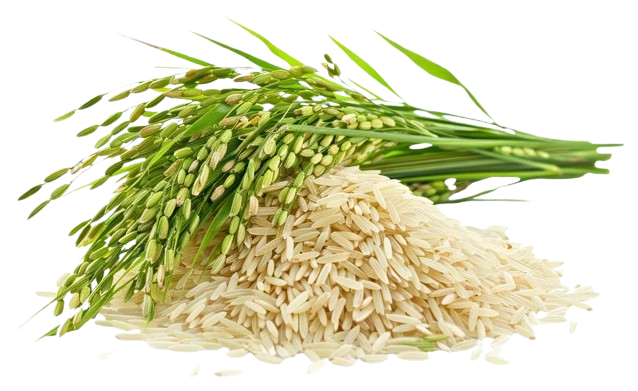 UNDERSTANDING RICE — VARIETIES, GRAIN LENGTHS & PROCESSING
Rice is more than just a staple; it is one of the world's most ancient and culturally cherished grains. Across continents and cuisines, rice has nourished civilizations for millennia, evolving into hundreds of distinctive varieties. For global buyers, importers, and culinary enthusiasts, understanding rice classification is essential to select the right grain for the right purpose.
Rice is defined not by a single attribute but by a combination of its seed family, grain length, processing method, and whether it is Basmati or Non-Basmati. Together, these elements establish the complete identity of every rice variety.
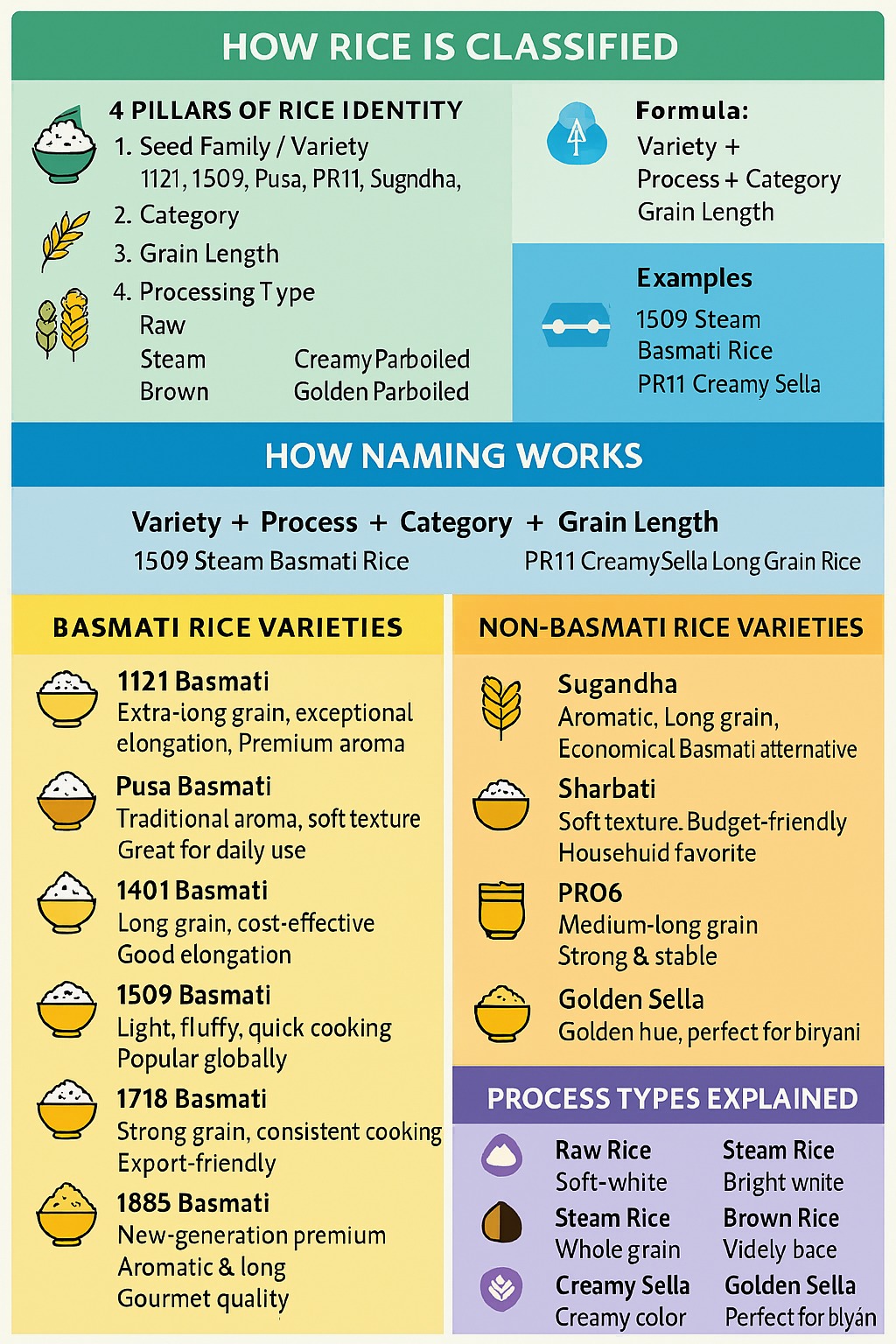
1. Seed Family: The Genetic Signature of Rice
Every rice grain originates from its seed family, also called the variety. This represents the scientific and agricultural identity of the grain, determined by breeders and agricultural institutions.
Examples:
Basmati Families: 1121, 1509, Pusa, 1401, 1718, 1885
Non-Basmati Families: Sugandha, Sharbati, PR06, PR11
The seed family dictates the grain's natural length, aroma, texture, and cooking behavior. For example, 1121 is famed for extraordinary elongation, while PR11 is prized for its stability and value.
2. Basmati vs. Non-Basmati: The Two Principal Categories
Rice is broadly classified into two main categories:
Basmati Rice
Celebrated globally for its aroma, slender grains, and remarkable elongation, Basmati rice is traditionally grown in the Himalayan foothills of India and Pakistan. Its long, fragrant grains are perfect for biryanis, pulaos, and premium culinary creations.
Non-Basmati Rice
This category encompasses a variety of short, medium, and long grains. Non-Basmati rice is versatile, cost-effective, and widely consumed across Asia, Africa, and the Middle East. Varieties such as PR11 and Sharbati are favored for their consistency, affordability, and adaptability.
3. Grain Length: The Physical Classification
Grain length, measured as Average Grain Length (AGL), is a key indicator of a rice variety's appearance and cooking characteristics.
Classifications include:
- Short Grain Rice
- Medium Grain Rice
- Long Grain Rice (Above 6.60 mm)
- Extra Long Grain (ELG): Premium Basmati varieties such as 1121 and 1509
Grain length affects texture and presentation: long grains remain fluffy and separate, while medium grains offer a softer, more cohesive texture.
4. Processing Type: How the Grain Is Treated
The same variety can undergo different processing methods, each producing distinct characteristics:
Raw (White) Rice
Naturally milled, soft, and quick-cooking.
Steam Rice
Partially steamed before milling for stronger, bright white grains.
Brown Rice
Whole-grain rice retaining the bran layer, rich in fiber and nutrients.
Creamy Parboiled (Creamy Sella)
Parboiled rice with an off-white hue; firm grains remain separate after cooking.
Golden Parboiled (Golden Sella)
Parboiled rice with a golden hue, ideal for biryanis and premium long-grain dishes due to its strength and aroma retention.
How Rice Is Named: A Global Standard
Rice nomenclature combines all four parameters:
Variety + Processing Type + Category + Grain Length
Examples:
1509 Steam Basmati Rice
(Variety: 1509 | Process: Steam | Category: Basmati)
PR11 Creamy Sella Long Grain Rice
(Variety: PR11 | Process: Creamy Sella | Length: 6.70 mm | Category: Non-Basmati)
This system ensures clarity and consistency for buyers, traders, and consumers worldwide.
PREMIUM RICE VARIETIES — DETAILED DESCRIPTIONS
Explore the unique characteristics of each rice variety, ideal for your website's product education section.
BASMATI RICE VARIETIES
1121 Basmati Rice
A world-renowned Basmati, 1121 boasts extra-long grains and exceptional elongation after cooking. Its slender, aromatic grains deliver a luxurious, non-sticky texture — perfect for premium biryanis and fine dining experiences.
Pusa Basmati Rice
Pusa Basmati blends traditional fragrance with modern grain strength. It cooks to soft, elongated perfection, making it ideal for households and restaurants seeking authentic Himalayan flavor at accessible prices.
1401 Basmati Rice
1401 offers a balance of quality and affordability. With good elongation, aroma, and long-grain profile, it is popular among exporters targeting markets that desire Basmati characteristics without premium pricing.
1509 Basmati Rice
Known for light texture, quick cooking, and superior grain length, 1509 is favored in domestic and international markets. It becomes long, fluffy, and non-sticky, suitable for daily consumption and commercial kitchens.
1718 Basmati Rice
1718 is an improved variety designed for enhanced grain strength and cooking stability. It retains traditional Basmati aroma and elegance while offering durability during processing and cooking, making it a favorite for exports.
1885 Basmati Rice
A next-generation Basmati, 1885 delivers long, aromatic grains with excellent elongation. Its refined texture makes it ideal for high-end retail and gourmet culinary applications.
NON-BASMATI RICE VARIETIES
Sugandha Rice
Sugandha is an aromatic non-Basmati with mild fragrance and long grains. Popular in Middle Eastern and Asian cuisines, it cooks into soft, separate grains, offering a cost-effective alternative to Basmati.
Sharbati Rice
Sharbati is known for its soft texture and versatility. It cooks to tender, fluffy grains, making it a preferred choice for everyday meals and retail distribution.
PR06 Rice
PR06 is a strong, medium-to-long grain variety favored by bulk buyers, catering services, and canteens. Its high volume expansion and shape retention make it reliable for large-scale cooking.
PR11 Rice
PR11 is one of the most widely consumed non-Basmati varieties. With an average grain length of 6.70 mm, it is classified as long-grain. PR11 is prized for stability, high yield, and affordability, making it a staple in Africa, the Middle East, and institutional kitchens.
Partner With Us
Please fill out the form below and we will get back to you as soon as possible to discuss partnership opportunities.